
Description
6.4 The Origins of Christianity History Presentations
Enhance your history classroom with ready-to-use multimedia lessons based on the Houghton Mifflin Harcourt World History textbook. These comprehensive packages include PowerPoint and Keynote formats for flexible classroom instruction. Upon purchase, you receive an instant access link to copy student notes directly into Google Drive with one click.
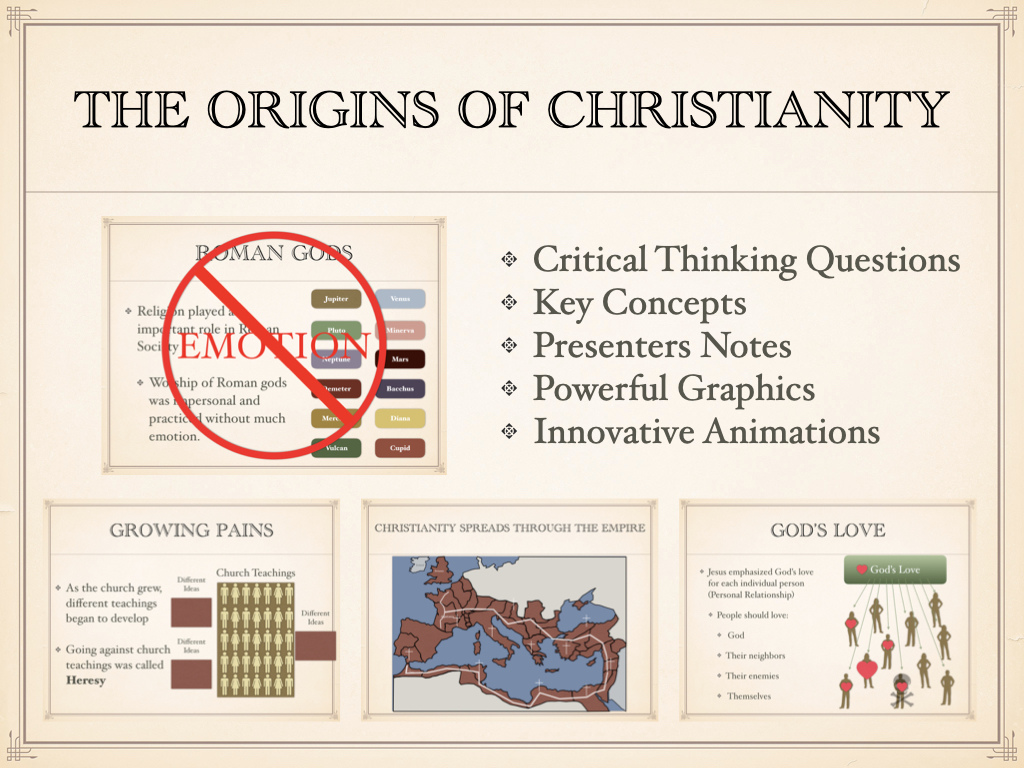
Presentations include critical thinking questions, social studies concepts, powerful graphics, and animations that help students master complex historical periods. Students explore the foundations of early faith through the life and teachings of Jesus of Nazareth. Lessons trace how Jesus was born in Judea, teaching monotheism, the Ten Commandments, and the Torah. The curriculum covers his public ministry, the Gospels written by his disciples, and his crucifixion under Pontius Pilate.
Later modules highlight the spread of the faith through the missionary journeys of the Apostle Paul. Paul taught that Jesus was the Son of God who died for human sins. Students also examine turbulent historical events, including the Jewish rebellion of 66 AD and the temple destruction in 70 AD. Furthermore, lessons review the severe persecution of early Christians under Roman rule.
The curriculum details the pivotal moment when Emperor Constantine issued the Edict of Milan in 313 AD to end persecution. Later, Emperor Theodosius made Christianity the official state religion in 380 AD. Finally, lessons examine the Council of Nicaea, the Nicene Creed, and the theological contributions of Augustine of Hippo.
Note: These materials were prepared by Harms LLC. They are neither developed, reviewed, nor endorsed by Houghton Mifflin Harcourt Publishing Company, publisher of the original World History: Patterns of Interaction work.
Looking for more? Explore our complete collection of History Presentations.
Reviews
There are no reviews yet.