History Simulations
Interactive, Online History Simulations Built for Modern Classrooms
Need Approval From Your Principal or Department Head?
Discover the pedagogical research, ADD/ADHD engagement benefits, and 21st-century skill alignment behind our hands-on activities. Learn more about Why History Simulations Work and access our free administrator justification resources to get your school on board!
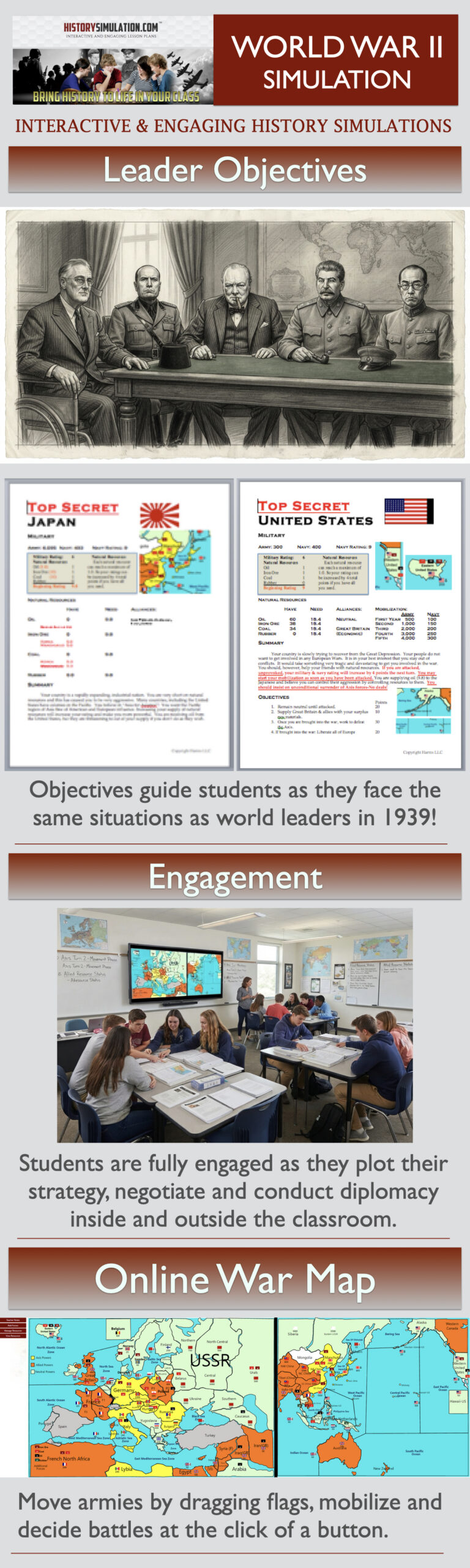
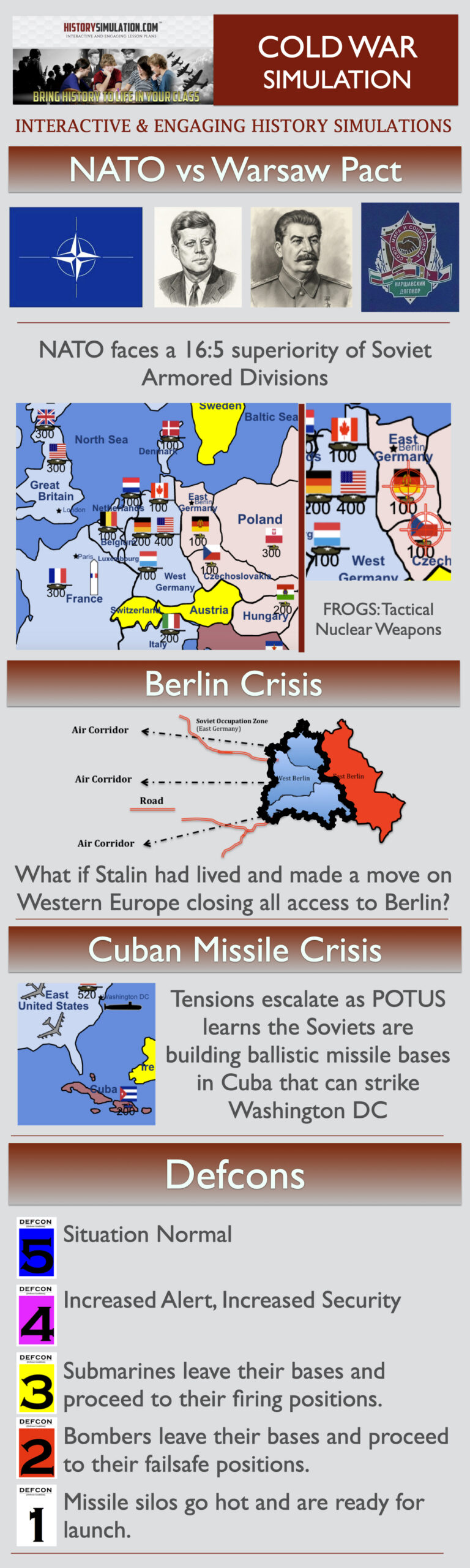
Interactive History Simulations
The Benefits of History Simulations for Students
History simulations have emerged as powerful educational tools, providing students with immersive learning experiences. By engaging in simulations, students can explore historical events, understand complex concepts, and develop critical skills. Here are some of the key benefits of using history simulations in the classroom:
1. Active Engagement
History simulations require students to actively participate in the learning process. Rather than passively absorbing information, students immerse themselves in historical scenarios, making decisions and experiencing the consequences of their actions. This active engagement fosters a deeper understanding of historical events.
2. Critical Thinking and Problem-Solving Skills
Simulations challenge students to think critically and make strategic decisions. They must analyze situations, weigh options, and consider outcomes. This process enhances problem-solving skills, as students learn to navigate complexities and develop strategies in a dynamic environment.
3. Collaboration and Communication
Many history simulations involve group work, encouraging students to collaborate with peers. Through teamwork, students enhance their communication skills and learn to share ideas effectively. This collaborative aspect mirrors real-world scenarios, preparing students for future teamwork in diverse settings.
4. Empathy and Perspective-Taking
By stepping into the shoes of historical figures or groups, students develop empathy and a better understanding of different perspectives. This experiential learning helps them appreciate the multifaceted nature of history and the diverse experiences of people throughout time.
5. Retention of Knowledge
Engaging in simulations can lead to improved retention of historical knowledge. The hands-on experience and emotional investment in the simulation help reinforce learning, making it more memorable than traditional lecture-based methods.
6. Real-World Application
Simulations often incorporate real-world scenarios and challenges, allowing students to apply their learning to practical situations. This connection to the real world makes history more relevant and meaningful, encouraging students to see the importance of historical events in contemporary society.
Conclusion
Incorporating history simulations into education offers numerous benefits that enhance student learning. From fostering critical thinking to promoting collaboration, these immersive experiences engage students in powerful ways. As educators look for innovative methods to teach history, simulations provide a compelling solution that prepares students for both academic and real-world challenges. By embracing this approach, educators can transform history lessons into dynamic explorations of the past.

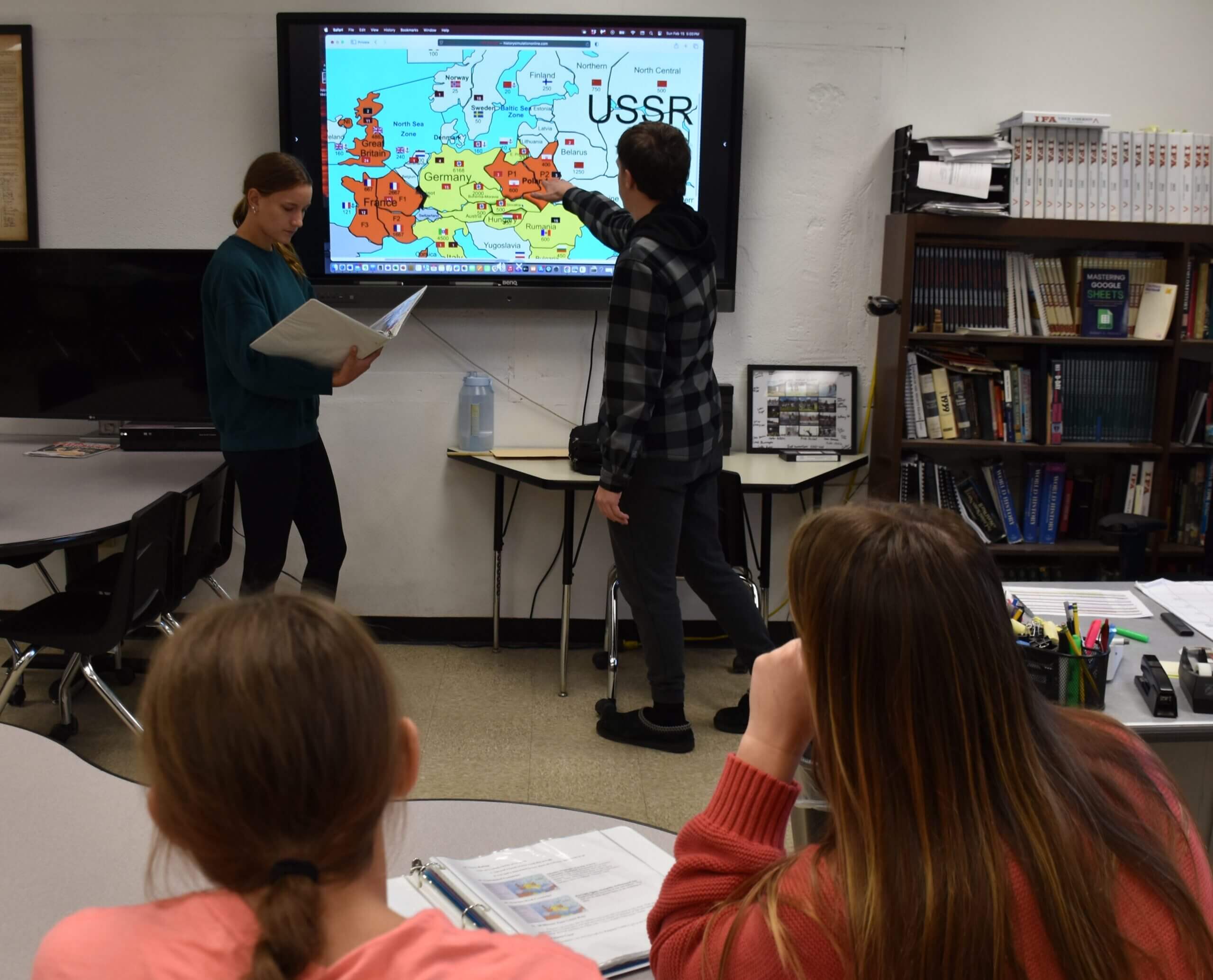
Select Your Favorite Simulation
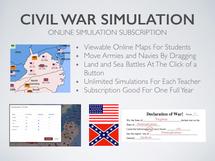
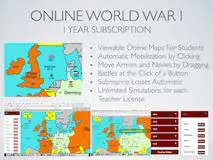
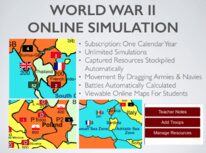
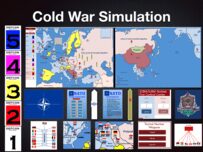
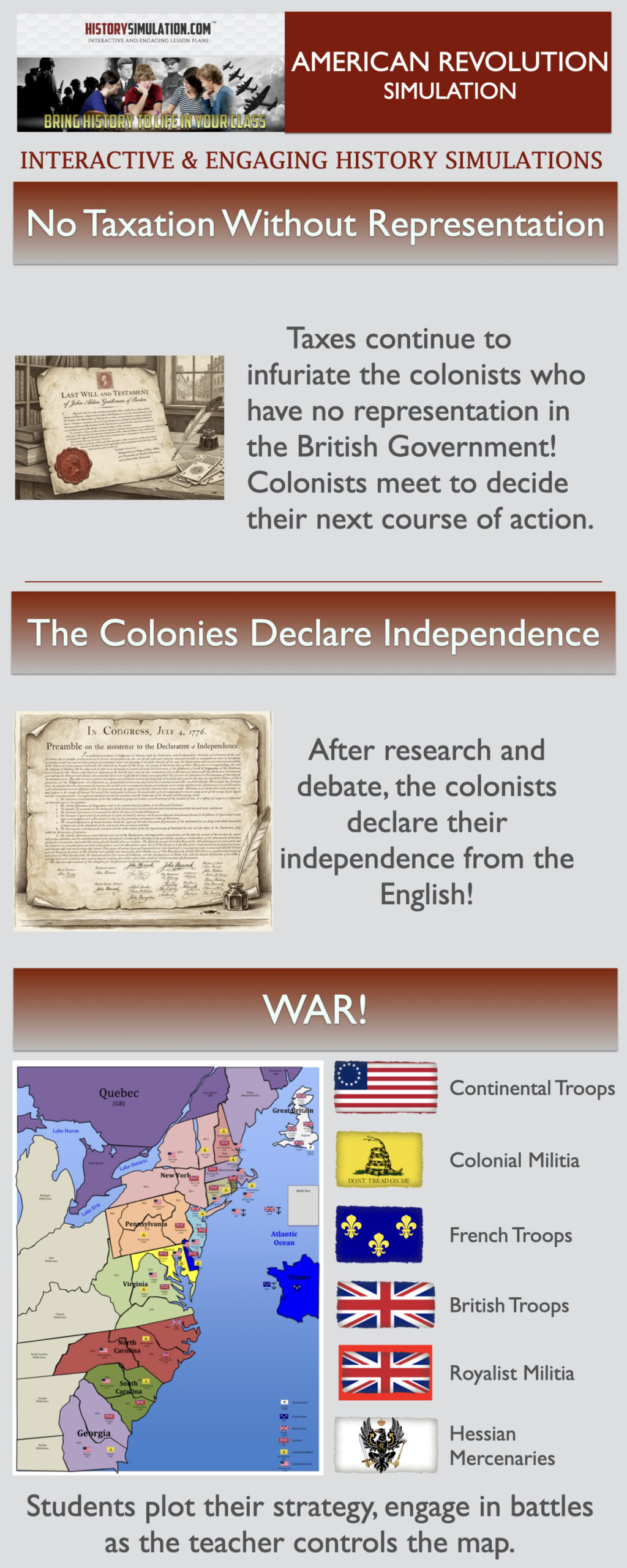
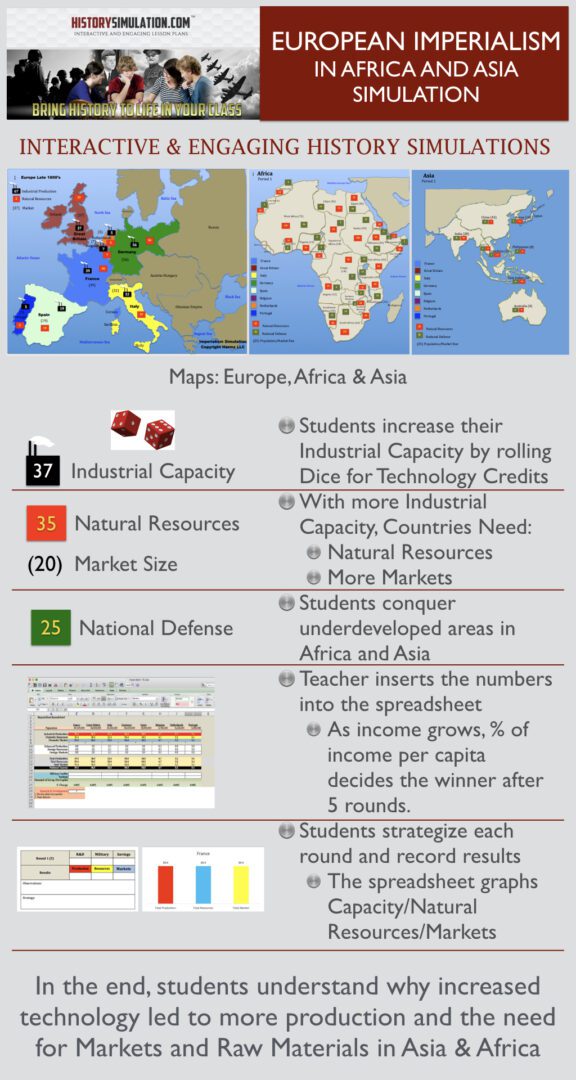
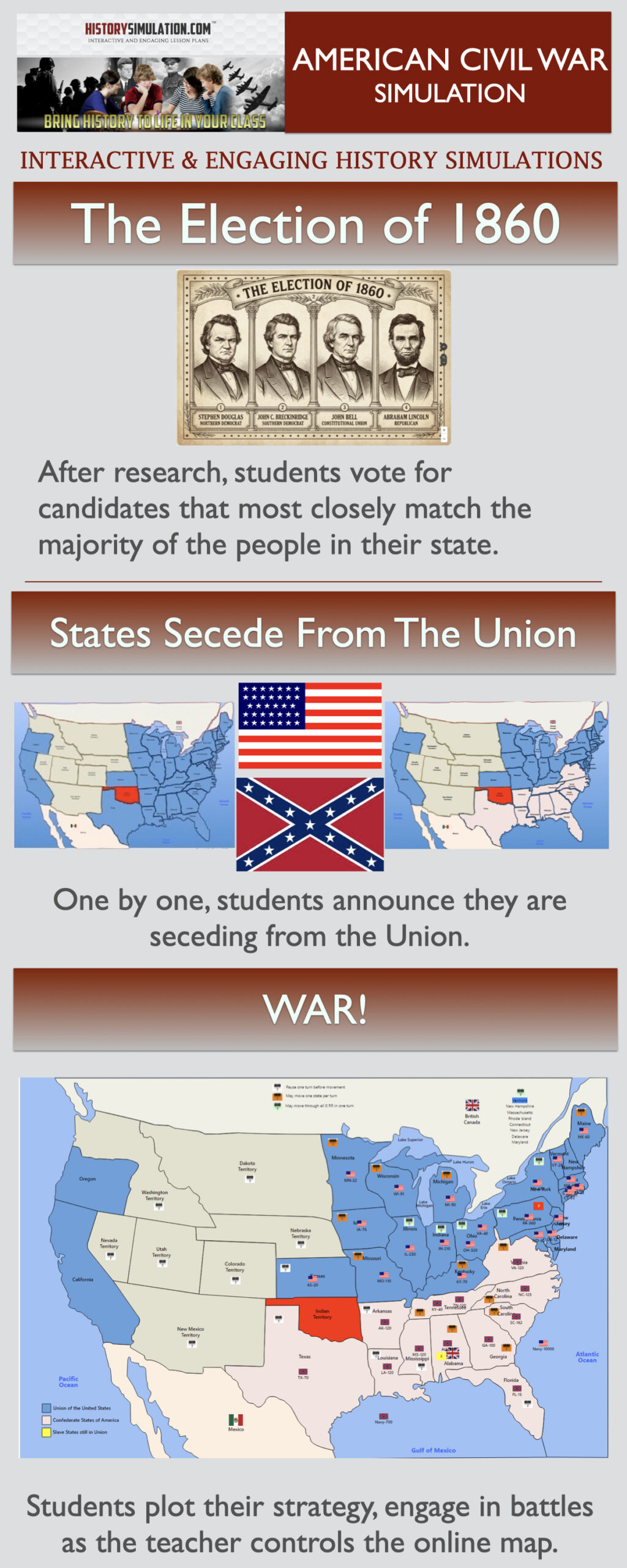
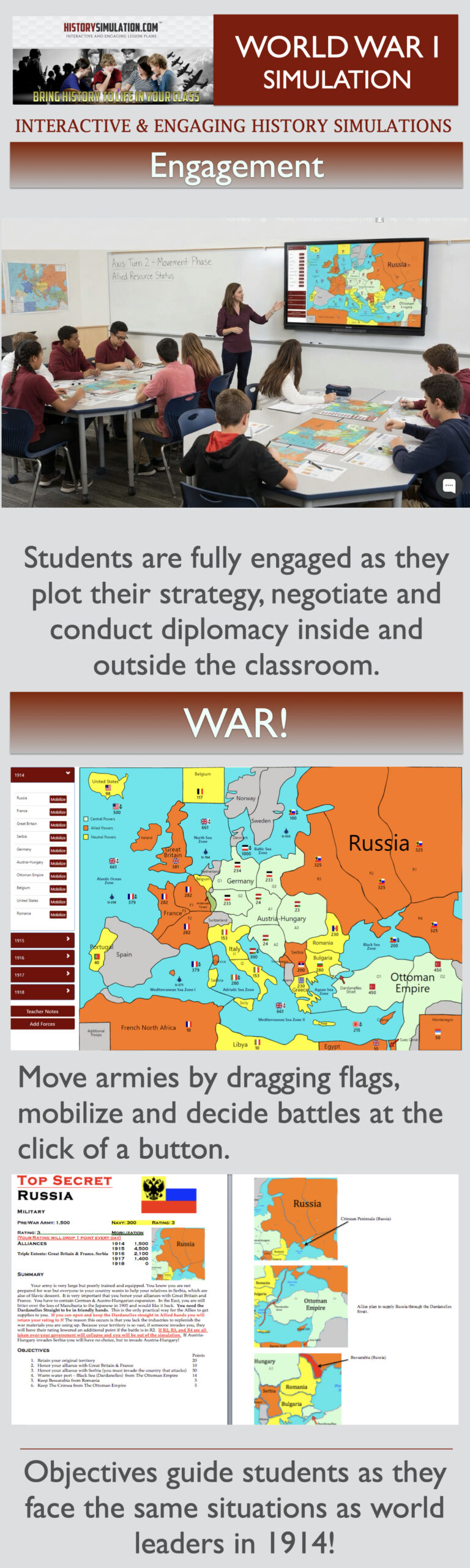
These online and interactive lesson plans are designed to take less class time and are easier for teachers to set up and run. Real-time maps are available online for student’s computers.
At $48.00 for all the materials and a one-year subscription, it will reduce the amount of time the simulation takes, and the online platform will streamline the process.
Click the links for the categories above to see the simulations available for purchase
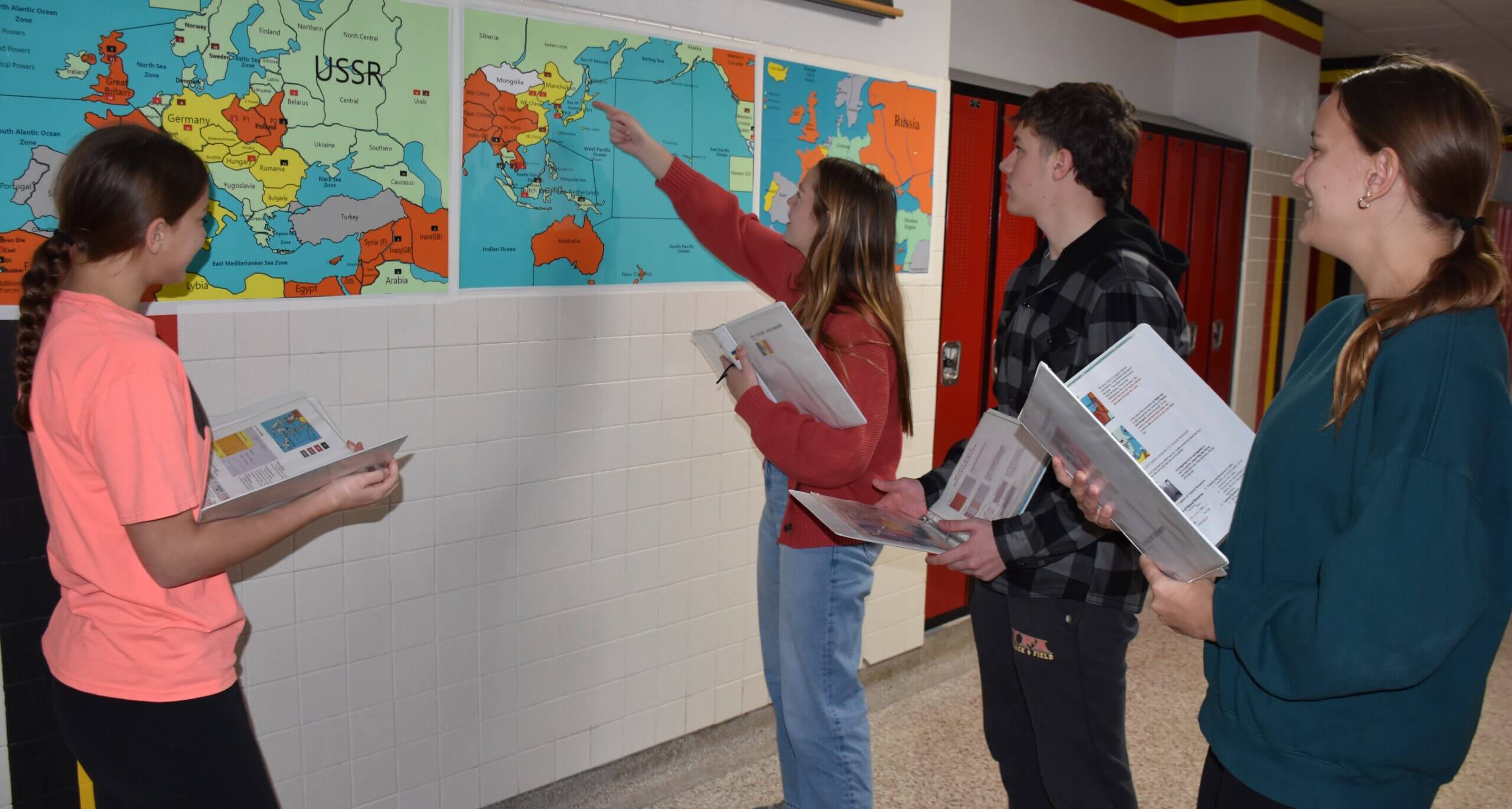
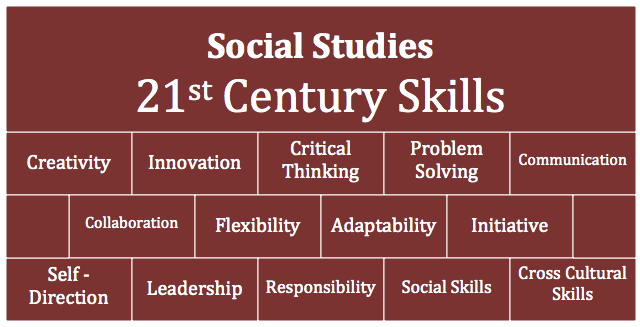
History simulations are not scripted plays. In fact, the outcome can be in doubt to the very end. Why? Because even though students in different classes may have the same objectives-it’s how they go about achieving them which taps into their creativity and innovation.
Different circumstances and leaders help to tap into student’s problem-solving skills.
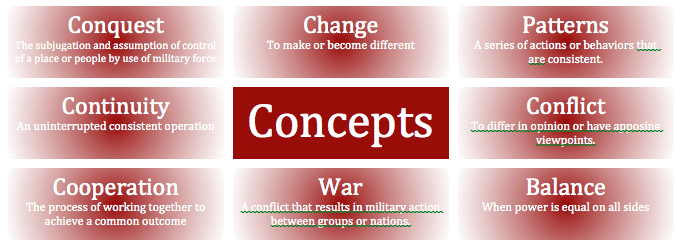
These history activities are full of social studies concepts like conflict and war. Many countries have the same objectives, and that naturally creates conflict.
Gamification is beneficial to students.
Students are excited to learn and compare their actions with what the real leaders of that time period did.
Online Simulation Platforms
What You Need
Improvements
Remains the Same
Online Simulation Platform 1 Year Subscriptions